
8 Reasons to Take a Sound Bath Training
(and Why Certification Matters)
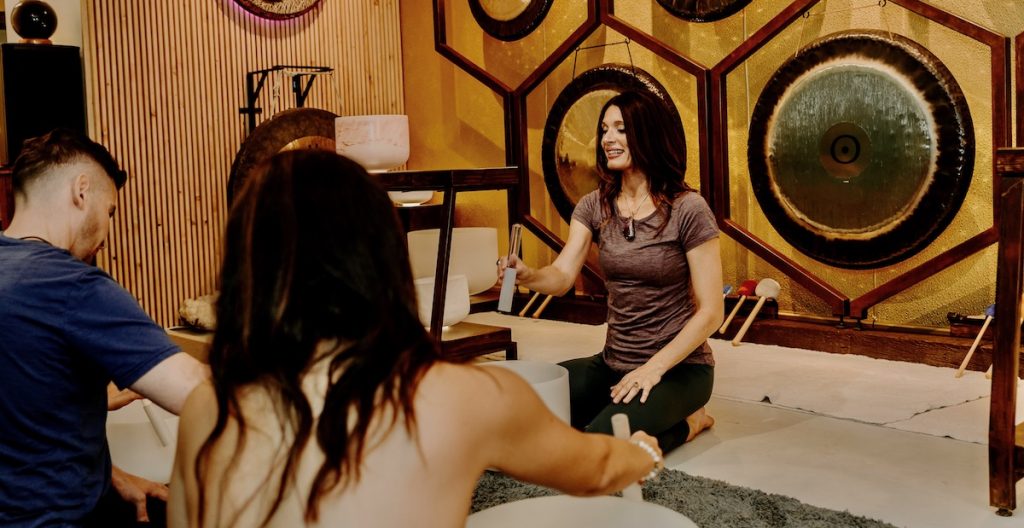
Discover how professional sound bath training helps you create transformative experiences, build confidence, and share sound with integrity.
Imagine entering a peaceful yoga studio, ready for your first sound bath. Your friend has raved about how sound baths helped her relax, spark creativity, handle stress, and sleep better. You’ve been curious for months, and finally found one to try nearby.
But the experience isn’t what you expected. The sounds are jarring, high-pitched, and loud. The transitions are abrupt, and you leave feeling uneasy instead of calm.
What went wrong?
The difference often lies in the facilitator’s training. A skilled sound bath practitioner knows how to create a smooth, transformative experience. An untrained one can leave participants frustrated or unsettled.
With the rising popularity of sound baths, many people buy instruments and begin offering sessions without training. The result is often inconsistent or even uncomfortable experiences.
If you’re passionate about sound baths and want to share their benefits professionally, proper training and certification make all the difference.
How to Choose a Sound Bath Training
Before you start your journey, it helps to know what makes a quality sound bath training. Look for a program led by an experienced facilitator who has developed their own methods through years of practice or is certified to teach a proven system developed by professionals.
Be cautious of teachers who start training others soon after taking a course themselves. They are likely to lack the sufficient real-world experience that is necessary to teach others effectively.
As sound baths become more popular, more sound bath or sound healing trainings appear. Take time to research who you’re learning from. A great teacher will help you build confidence and skill, and give a strong foundation for your sound bath-playing business.
When I first learned to play gongs, the person who introduced me simply said, “Just hit it with the head of the mallet.” In the early 2000s, there were no sound bath trainings or teachers to learn from. I had to develop my own approach through years of personal practice, refining techniques over more than a decade before I began teaching others.
1. Choose the Right Instruments for Your Sound Bath
The instruments you use shape the entire experience. A good sound bath training includes learning how to select high-quality, professional instruments that align with your goals.
You’ll learn which brands deliver better sound, how to invest wisely, and what to listen for when choosing bowls, gongs, or other instruments. Two instruments may look similar and cost the same, yet one can produce harsh tones and little sustain, and the other can sound full and immersive. Training can help you learn to discern the differences and select the right instruments for you.
When I first started playing gongs, there was one brand that nearly everyone in the sound bath world used. They were high quality and produced beautiful tones, so I assumed there couldn’t be anything better. Then, in 2019, I experienced a different brand made by a gong maker with more than 40 years of experience. I thought, “What could the difference really be?” The difference was huge. After I began using these gongs, regular attendees told me they went deeper and felt more transformed than ever before. The first time I played five of them together, I completely lost track of time. I finished the session late, which never happens, because I’m usually right on schedule.
2. Learn Techniques for a Therapeutic Experience
A sound bath is more than just hitting bowls or gongs. It’s about creating an immersive, peaceful environment that supports relaxation, reflection, and transformation.
People offering sound baths that skip training often move from one instrument to the next in a choppy manner. Or, they play too many high-pitched sounds or at a volume that is too loud. Without learning how to transition and blend sounds mindfully, a sound bath can feel disjointed rather than fluid and immersive.
In a good course, you’ll learn techniques for playing instruments in ways that guide participants into calm, introspective states. You’ll learn how to combine instruments and structure your sound bath in a way that yields effective results.
When my partner and I refined one of our core SSL™ gong playing techniques, we immediately noticed a change in our students’ results. Their playing became more fluid and intentional, and they were able to create noticeable effects for participants much more quickly than before.
3. Structure Seamless Sound Bath Events
An effective sound bath flows like a song. Abrupt changes in volume or tone can pull participants out of relaxation.
Professional sound bath training teaches you to structure each event thoughtfully, with smooth transitions and cohesive energy. You’ll learn how to layer sounds and transition smoothly from one instrument to another, keeping participants fully immersed.
4. Harmonize Sounds for Deep Relaxation
Not all sounds work well together. Some tones blend beautifully, while others clash and create tension.
A good course will help you understand which notes and instruments harmonize best for calm, restorative experiences. You’ll learn how to create balance and avoid combinations that disrupt relaxation or cause stress.
5. Build a Thriving Sound Bath Business
Running a sound bath is only one part of being a facilitator. Building a sustainable business takes knowledge and planning.
Reputable certification programs include practical lessons on organizing events, marketing your services, and managing logistics. These tools help you turn your passion into a professional path while supporting your community with consistent, high-quality events.
One of our recent students began getting paid sound bath opportunities halfway through her training. The venue that hired her later shared that, compared to other sound baths they’d hosted, they would have guessed she had been playing for years.
6. Deliver Consistent, High-Quality Experiences
Participants return when they know what to expect. A proper training will provide you with a repeatable structure and solid techniques, so every sound bath feels intentional and reliable.
You’ll learn how to deliver experiences that leave people feeling renewed each time, instead of depending on “intuition” or guesswork.
7. Elevate the Credibility of Sound Baths
Untrained facilitators can unintentionally give sound baths a bad reputation. By investing in professional training, you help strengthen the credibility of the entire field.
Even if not every participant likes sound baths, your well-trained approach demonstrates skill, awareness, and care. You become part of raising the overall standard for the practice.
8. Build Confidence as a Sound Bath Practitioner
Training can build confidence. When you know how to handle your instruments, manage group energy, and design effective events, you can lead with ease.
Sound bath certification gives you the skills and self-assurance to guide others through powerful experiences. Your confidence should grow with each event.
Start Your Sound Bath Journey
If you want to offer sound baths that really help people relax and recharge, a good training is necessary. Choose a course that is taught by experienced professionals with a full-time sound bath business.
Sound baths can change lives. With the right training, you can confidently create those moments of calm and transformation for others.
Invest in yourself, elevate your skills, and share the benefits of sound baths with confidence.
Ready to begin? Explore our Group SoundbathPlayer Certification Course and take the first step toward becoming a Certified Soundbath Player™.

Learn more about our training
What does it mean to be a sound bath professional?
Do you need a certification to play sound baths?
Sound Healing Training vs. Sound Bath Training