
What Is Breathwork? Benefits, Techniques & How to Start

What Is Breathwork? Benefits, Techniques & How to Start
There is a moment, usually somewhere between the third and fourth deliberate exhale, when something shifts. The noise in my head quiets. My shoulders drop. My body remembers it is safe. That moment, simple and profound, is what breathwork makes possible.
So what is breathwork, exactly? At its core, it is the intentional practice of directing your breath, its rhythm, depth, speed, and pathway, to produce measurable changes in how you feel physically, emotionally, and mentally. It is not passive observation. It is active, purposeful control of the one automatic body function you can actually override at will.
Breathwork is ancient. Pranayama from the Indian yogic tradition and Qigong from traditional Chinese medicine built entire healing systems around the breath thousands of years ago. Today, modern medicine and mainstream wellness communities have validated what those traditions knew all along: how you breathe shapes how you live.
Over my 20+ years in the wellness industry offering sound baths, yoga, massage, and Reiki, I have seen people shift in just a few minutes of conscious breathing. Whether someone arrives at a sound bath, a yoga class, or a massage, stressed, irritated, or simply searching for something they cannot name, the breath is a wonderful place to begin.
In this article, I will discuss what breathwork is, how it works scientifically, the full range of its benefits, the most effective techniques, and how to start a practice that actually sticks.
Key Takeaways
- Breathwork is the intentional, deliberate direction of the breath to produce measurable physical, emotional, and mental changes
- It activates the parasympathetic nervous system, reducing stress hormones and promoting deep relaxation
- Dozens of techniques exist, from gentle belly breathing to advanced holotropic breathwork, each serving distinct purposes
- Benefits span physical health, emotional resilience, mental clarity, and consciousness expansion
- Breathwork pairs powerfully with sound baths for a profoundly interconnected journey
- Anyone can begin with just five to ten minutes of daily practice
What Is Breathwork? Definition, Origins, and Core Philosophy
Breathwork is the intentional practice of directing the rhythm, depth, speed, and pathway of the breath to produce specific physical, emotional, and mental outcomes. When you breathe without awareness, your brain handles it automatically. When you breathe with intention, you take the wheel, and that shift changes everything.
One distinction worth drawing clearly: breathwork is not the same as mindfulness. Mindfulness typically involves observing the breath as it naturally occurs, without changing it. Breathwork is fundamentally about control, actively guiding the diaphragm and breath cycle with deliberate purpose to move your body and mind into a different state.
The lineage of this practice runs deep. Pranayama from the Indian yogic tradition, Qigong from traditional Chinese medicine, and Ayurvedic healing practices all consider structured breathing to be important for physical and spiritual well-being, not as a supplement but as a core practice. These systems understood intuitively what science now confirms: the breath is a bridge between the body and the mind, and crossing that bridge with intention produces real change.
Modern medicine has fully embraced this understanding. Breathwork now appears in clinical settings, therapeutic programs, and hospital-based stress reduction courses. It is evidence-backed, not fringe.
The core philosophy underlying every breathwork technique is beautifully simple: on the exhale, we release tension and toxins; on the intentional inhale, we nourish both mind and body.
The Science Behind Breathwork: How Conscious Breathing Changes Your Body
Breathing is the only autonomic bodily function you can consciously override. You cannot directly change your heart rate or control your digestion, but you can control your breath and, through it, influence virtually every system in your body.
The key lies in the autonomic nervous system, which governs all of your body’s automatic processes through two branches:
- The sympathetic nervous system drives the fight-or-flight-or-freeze response, raising cortisol, increasing heart rate, and preparing the body to face perceived danger.
- The parasympathetic nervous system governs the rest-and-digest state, calming the body, lowering blood pressure, and restoring balance after stress.
The problem for most people is chronic sympathetic system overload. Work deadlines, financial pressure, and constant information overload keep the nervous system in a sustained alert state, not because of real physical danger, but because modern life rarely signals that it is safe to stand down. Over time, this chronic elevation of cortisol contributes to insomnia, digestive problems, high blood pressure, muscle tension, and weakened immunity.
Slow, deep breathing, especially with an extended exhale, directly stimulates the vagus nerve, the primary parasympathetic nerve that passes through the diaphragm. This vagal activation triggers a cascade of benefits: reduced cortisol, lower heart rate, improved heart rate variability, decreased inflammation, and greater emotional regulation. The brain receives a clear message that the body is safe, and every system responds accordingly.
“Breath is the link between mind and body.” — Dan Brulé
Nasal breathing adds an additional layer of benefit. The nasal passages warm, filter, and humidify incoming air while releasing nitric oxide, a compound that dilates airways and helps lower blood pressure. Chronic mouth breathing bypasses all of this and is linked to sleep apnea, increased risk of infection, and dental problems. Most breathwork practices emphasize nasal inhalation for exactly these reasons. Regular breathing should be through the nose for optimum health.
Faster-paced techniques do the opposite. They intentionally activate the sympathetic system in a controlled way, building stress resilience rather than sustaining harmful chronic stress. These are sometimes open-mouthed practices, meant to be used as a practice, but not as a regular breathing pattern.
 The Benefits of Breathwork: Physical, Emotional, and Spiritual
 The Benefits of Breathwork: Physical, Emotional, and Spiritual
The research on breathwork has grown significantly, including a Effect of breathwork on stress and mental health drawn from randomised-controlled trials, and the results span far beyond simple relaxation. Even brief, consistent daily practice produces meaningful, measurable outcomes across multiple dimensions of health, as demonstrated by research showing that Brief structured respiration practices enhance mood and reduce physiological arousal.
Physical health benefits include:
- Balanced blood pressure and reduced heart rate
- Improved sleep quality and more time in deep, restorative sleep
- Stronger immune function and reduced systemic inflammation
- Enhanced respiratory capacity, particularly beneficial for asthma, COPD, and chronic heart failure
- Improved oxygen delivery and blood flow throughout the body
- Reduced oxidative stress following physical exertion
- Release of cortisol and other stress hormones from the body
Mental and emotional benefits include:
- Reduced anxiety, depression, and professional burnout
- Improved mental focus, clarity, and concentration
- Support in processing trauma and PTSD symptoms
- Greater emotional resilience and regulation
- Decreased addictive behaviors
- Elevated mood, contentment, and a more positive overall outlook
Then there is the spiritual dimension, where breathwork becomes genuinely extraordinary. Certain techniques, particularly holotropic breathwork or other open-mouthed, faster breathing techniques, can induce altered states of consciousness, granting access to deeper layers of the psyche. Practitioners often report vivid imagery, emotional catharsis, feelings of profound interconnectedness, and experiences that feel larger than the individual self.
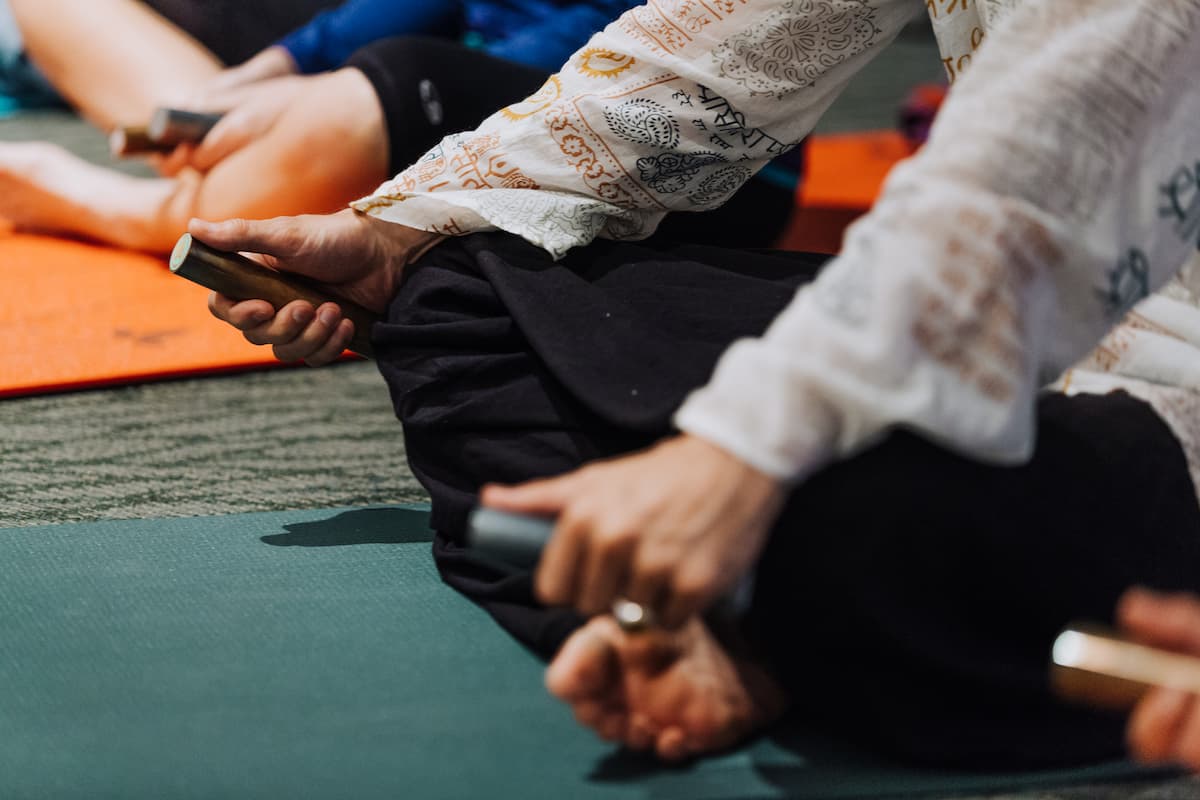
This is precisely the territory where breathwork and sound baths meet. One of our most popular events is Breathwork SoundLab™. We created it to combine two powerful techniques for transformation: rhythmic, open-mouthed breathwork and a gong-based sound bath. With this event, the depth of what becomes available to participants is unlike anything either practice offers on its own.
Common Breathwork Techniques: From Beginner to Advanced
There is no single correct technique. Part of developing a breathwork practice is discovering which methods serve you at different moments, whether to calm down before bed, regain focus mid-afternoon, or go deep into a meaningful session.
Here are the most established techniques, from accessible starting points to advanced modalities:
- Diaphragmatic (Belly) Breathing is a great place to start. You consciously expand the belly on the inhale (the diaphragm moves downward), then relax it on the exhale. This technique helps lower blood pressure and heart rate and can be practiced while sitting, lying down, or standing.
- Box Breathing uses four equal counts, inhale, hold, exhale, hold, to focus the mind and disrupt anxious thought loops. It is widely used by high-performance professionals and military personnel for rapid stress recalibration. It’s also a common technique used in yoga.
- 4-7-8 Breathing involves inhaling for four counts, holding for seven, and exhaling for eight. The extended exhale stimulates vagal activity and is particularly effective for reducing anxiety and supporting sleep onset.
- Alternate Nostril Breathing (Nadi Shodhana) alternates airflow between nostrils to sharpen focus and create a simultaneously calm and energized state. It is ideal during stressful workdays or before high-stakes situations. It’s another common style used in yoga.
- Breath of Fire (Kapalabhati) uses forceful rhythmic exhales with passive inhales, activating and energizing the body while building diaphragm strength and stress resilience.
- Holotropic Breathwork, developed by Dr. Stanislav Grof, uses sustained rapid connected breathing to induce altered states, supporting trauma processing and deep emotional release. This technique must always be practiced with a trained facilitator, as the physiological and emotional intensity it produces requires skilled, qualified support.
- Meta Breath, developed by Robert Lee and taught at The Soundbath Center and The Gong Room. This is a rhythmic, open-mouth breathwork technique that sparks clarity and inner connection.
“Feelings come and go like clouds in a windy sky. Conscious breathing is my anchor.” — Thich Nhat Hanh
A note on safety: more intense techniques carry real risks, including hyperventilation, dizziness, tingling, and muscle spasms, especially for beginners. Always progress gradually and seek proper facilitation for advanced practices.
How to Begin Your Breathwork Practice and Deepen It With Sound
Starting does not require special equipment, a gym membership, or even a dedicated studio. The breath is already with you. Here is how to build a practice that holds:
- Begin with diaphragmatic breathing, as it is the safest, simplest, and most foundational technique available
- Find a quiet space when starting out; reducing distraction deepens your ability to focus on subtle breath changes
- Practice for five to ten minutes daily, as consistency rewires the nervous system far more effectively than infrequent long sessions
- Release the expectation of a silent mind; noticing when attention drifts and returning to the breath is the practice
- Use a word or focus on a feeling to quiet mental chatter during sessions
- Experiment across techniques to discover what serves you at different times and emotional states
- Take advantage of ordinary moments, a red light, the kettle boiling, a pause between meetings, as any intentional breath moves you forward
When you are ready to go deeper, breathwork and sound bath meditation are natural complements. Both work directly on the nervous system. Join us at one of our studios, or try out a recording.
Conclusion
Breathwork is one of the most accessible, scientifically supported, and deeply effective tools available for improving physical health, emotional well-being, and expanding awareness. It requires nothing beyond what you already carry, as the breath you are taking right now is the gateway.
The practice meets you wherever you are. A few minutes of belly breathing can lower your blood pressure today. A consistent daily practice can reshape your nervous system over months. And when you are ready to go further, an immersive, expert-guided experience can take you somewhere entirely new.
Our Breathwork SoundLab™ event exists for exactly that moment, when you are ready to let breath and sound work together to carry you into something deeper. We would be honored to guide you there.
Make your sound bath more powerful with breathwork.
Purchase breathwork and sound bath recordings.
