
What is a Sound Bath?
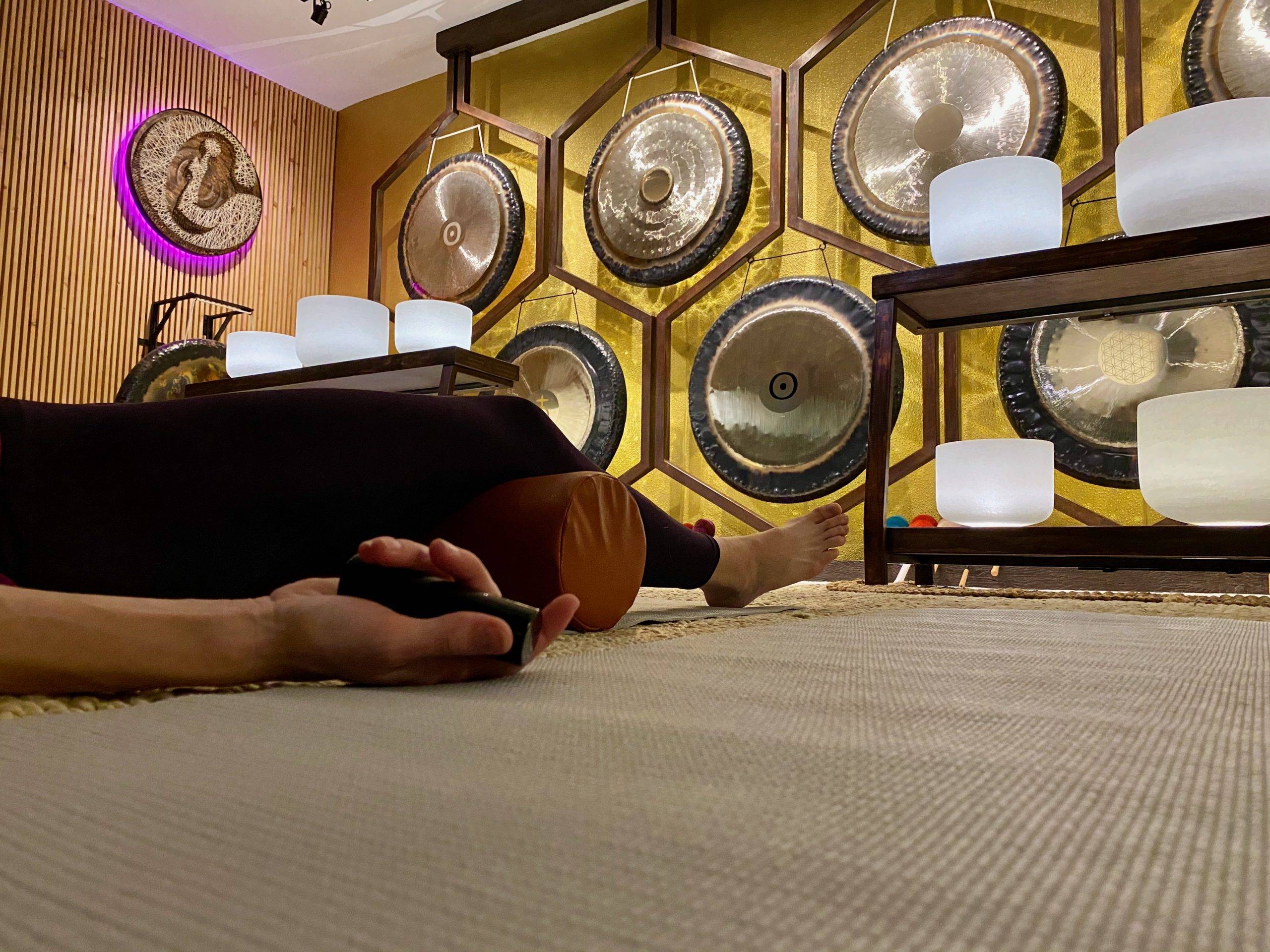
By Jamie Bechtold | Facilitating sound baths professionally since 2004
Many people have heard of sound baths and associate them with yoga or relaxation. Some still think it involves water and a bathing suit.
A sound bath is an experience where a practitioner plays live instruments to relax the body and calm the mind. Participants lie down, close their eyes, and listen as the sounds wash over them. No water is involved. The word “bath” refers to how sound surrounds you from all directions. Other common names for the experience include sound meditation, sound healing, and sound therapy.
What happens during a sound bath?
The term sound bath covers a wide range of experiences. All sound baths are different, and no two sessions are exactly alike. Most are offered in group settings, though private sessions for one or two people are also common. Recorded and online sound baths have grown in popularity in recent years as well.
Typical sound bath instruments include gongs, crystal singing bowls, Himalayan singing bowls (also called Tibetan singing bowls), ocean drums, and chimes. A trained practitioner shapes the sounds in a way that guides participants into a relaxed, meditative state.
During the sound bath experience, many people notice a shift in their mental state. Sound baths may help move the brain from active beta waves toward slower alpha or theta waves, which are associated with deep relaxation and light meditation. Some people fall asleep. Others remain in a restful, aware state that feels different from ordinary waking consciousness.
Why do people attend sound baths?
People come to sound baths for many reasons. Some of the most common include stress management, physical and mental relaxation, enhanced focus, creative insights, deeper meditation or yoga practice, expanded awareness, better sleep, mental clarity, processing difficult emotions, and general health and wellness support. Some people come because a friend or partner loves sound baths and they want to share the experience.
Most attend primarily to relax and decompress. Many find that the deeply restful state a sound bath creates helps them manage stress more effectively. Some participants report reduced physical tension and signs of nervous system regulation, such as lower heart rate and blood pressure, after a session.
Beyond relaxation, sound baths can activate a more alert inner state that many people find creatively productive. When sound baths become part of a regular wellness routine, the benefits tend to deepen over time.
What does the research say?
Studies on sound baths are still limited, but some findings are worth mentioning. A 2016 study of 62 adults found that tension, anxiety, and negative mood decreased significantly after a session involving Himalayan singing bowls. A 2020 review found possible improvements in physical measures like blood pressure and heart rate. Sound baths are not a replacement for medical treatment, but they are generally considered a low-risk complementary practice for most people.
What makes a good Sound Bath?
The quality of a sound bath depends on more than just the instruments in the room. The way a practitioner plays matters enormously. Anyone can strike a gong, but skillfully blending sounds to guide people into a meditative state takes training, experience, and musicality.
A good sound bath practitioner understands volume management, instrument quality, and how to stay connected to the group throughout the session. When a practitioner is grounded and attentive, participants feel it.
What do I do during a Sound Bath?
Lie down comfortably, usually on your back, and listen. Stay present with the sounds and whatever you notice in your body and mind. People who remain present rather than trying to fall asleep tend to get more out of the experience, though this becomes easier with practice.
Experiences vary from session to session. Some people feel physical sensations, others notice emotions. Some see colors, shapes, or images in a kind of waking dream state. Many people receive creative insights or find clarity on problems they couldn’t resolve in their normal waking state. Most people leave feeling noticeably more relaxed, open, and clear-headed.
Our Sound Baths
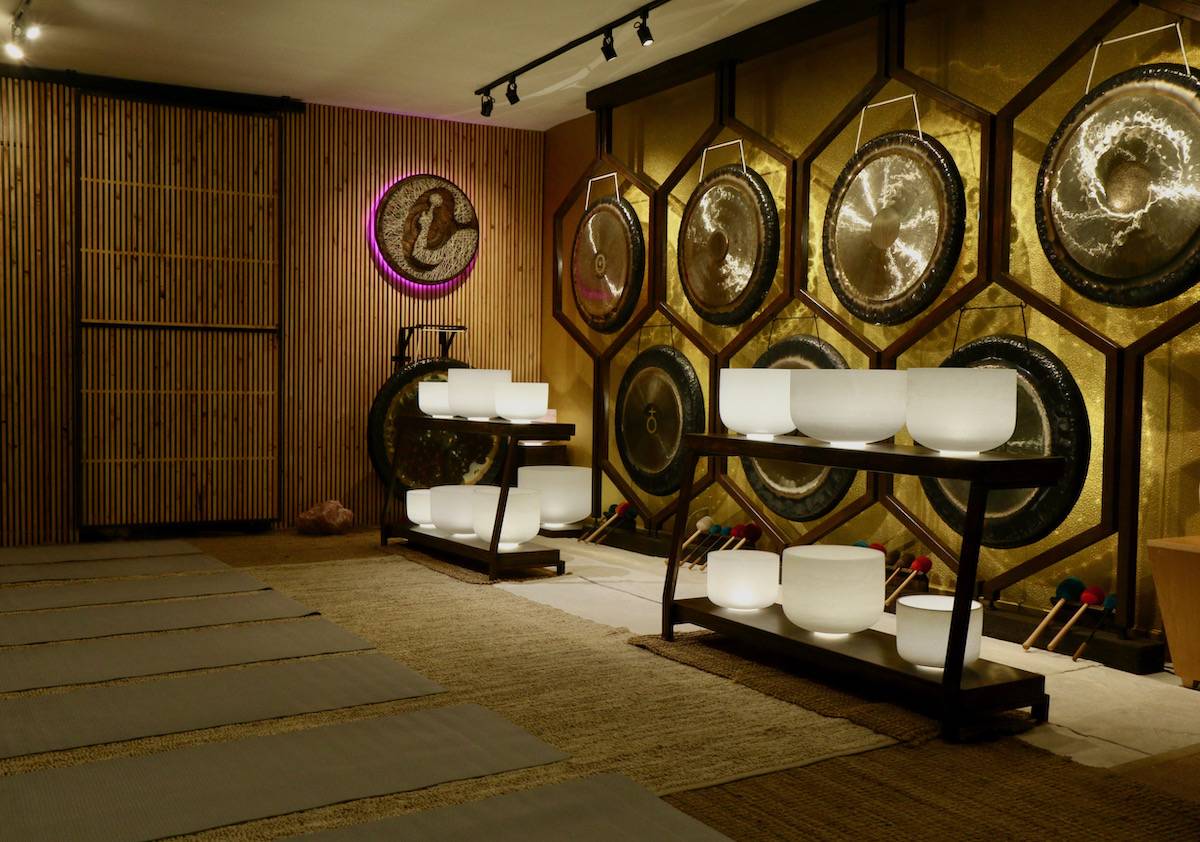
We play gongs and crystal singing bowls in all of our sound baths. The gong is our primary instrument. Its resonance carries people deep into relaxation in a way that bowls alone cannot.
Our sound baths are designed to support relaxation, self-discovery, and inner exploration. We use multiple premium gongs and crystal singing bowls in each session, and we regularly rotate our instrument selection to offer different sounds and combinations. Every instrument choice is made with therapeutic effect in mind.
We keep our events intimate. Attendance at our dedicated studio, The Gong Room near Joshua Tree, is limited to under 10 people, and we provide everything you need to be comfortable. The focus is on your inner experience, not the group dynamic.
What Should I Bring to a Sound Bath?
Most venues provide everything you need, including a mat, blanket, and sometimes an eye mask. Wear loose, comfortable clothing. Layers are helpful since body temperature can shift during a session. Arrive a few minutes early so you’re settled when the session starts.
Sound Bath Etiquette
- Come fragrance-free. Strong scents can be disruptive to others, so please arrive without heavy perfume or cologne.
- Breathe naturally throughout the session unless the event includes specific breathwork.
- Keep your eyes closed. Most sound baths are designed to guide you inward, and an eye mask can help if light is an issue.
- Turn your phone completely off before the session begins. A vibration or notification can pull an entire room out of a deep state.
- Arrive a few minutes early so you’re settled and ready when the session starts.
- Stay quiet during the sound bath. Save conversations for after.
- Come alcohol and substance free to get the most out of the experience.
- If you snore, lying on your side can help. If you feel someone gently touch the tops of your feet or ankles during a session, it means you’re snoring and are being quietly woken.
- If you have specific needs or concerns about any of these guidelines, reach out before booking so we can make sure the experience works for you.
